Air-Gapped Security: Why Isolation Still Matters in a Connected World
페이지 정보

본문
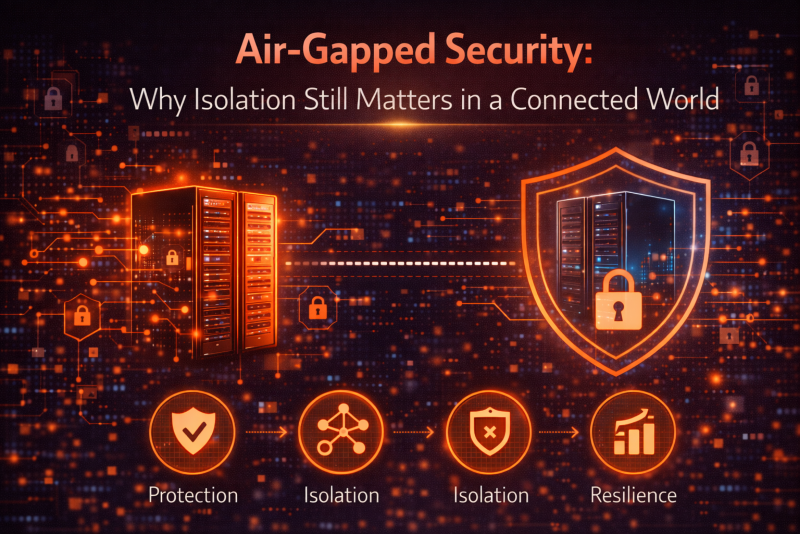
In an increasingly connected digital world, cybersecurity strategies often focus on protecting systems that are constantly online. However, one of the most effective and often overlooked security measures is the use of air-gapped networks. An air-gapped network is physically isolated from external networks, including the internet, making it extremely difficult for cyber attackers to gain access. Despite advances in cloud and network security, air-gapped systems continue to play a vital role in protecting critical assets.
1.
Maximum Isolation from Cyber Threats
The primary advantage of air-gapped networks is complete isolation. Since these
systems are not connected to external networks, they are largely immune to
common cyber threats such as phishing attacks, ransomware, and remote hacking
attempts. This makes them ideal for protecting highly sensitive environments
like military systems, nuclear facilities, and critical infrastructure.
2.
Protection Against Advanced Persistent Threats (APTs)
Advanced Persistent Threats are sophisticated, long-term attacks often carried
out by well-funded adversaries. Air-gapped networks significantly reduce the
risk of such attacks by limiting entry points. Even if attackers gain access to
a connected system, the air gap acts as a barrier that prevents lateral
movement into critical environments.
3.
Safeguarding Critical Data and Intellectual Property
Organizations that handle highly sensitive data such as government agencies,
financial institutions, and research labs benefit greatly from air-gapped
systems. By isolating critical data from external access, these networks help
prevent data exfiltration and unauthorized access, ensuring confidentiality and
integrity.
4.
Enhanced Control and Monitoring
Air-gapped environments allow organizations to maintain strict control over
data transfer and system access. Any data entering or leaving the network
typically requires physical intervention, such as using secure removable media.
This controlled approach makes it easier to monitor activity and detect
anomalies.
5.
Resilience Against Large-Scale Cyber Incidents
In the event of widespread cyberattacks such as global ransomware outbreaks air-gapped
networks remain unaffected due to their isolation. This makes them a crucial
component of business continuity and disaster recovery strategies, ensuring
that critical systems remain operational even during major incidents.
While air-gapped networks offer strong security benefits, they are not entirely immune to threats. Insider risks, supply chain vulnerabilities, and infected removable media can still pose challenges. Therefore, organizations must complement air-gapped systems with strict access controls, monitoring, and security policies.
In conclusion, air-gapped networks remain a powerful tool in modern cybersecurity. By providing unmatched isolation and protection, they help safeguard critical systems and data in an era where cyber threats are becoming increasingly sophisticated.
Top of Form
Read more : cybertechnologyinsights.com/
To participate in our interviews, please write to our Media Room at [email protected]
댓글목록
no comments.