Digital Workforce Twins: Transforming Talent Strategy and Planning
페이지 정보

본문
As organizations navigate rapid change, workforce decisions have become more complex and higher risk. Traditional HR metrics and historical data alone are no longer sufficient to predict talent needs, manage skills gaps, or plan for future growth. Enter the Digital Twin Workforce a data-driven, virtual representation of an organization’s workforce that enables HR leaders to model, simulate, and optimize talent strategies with precision.
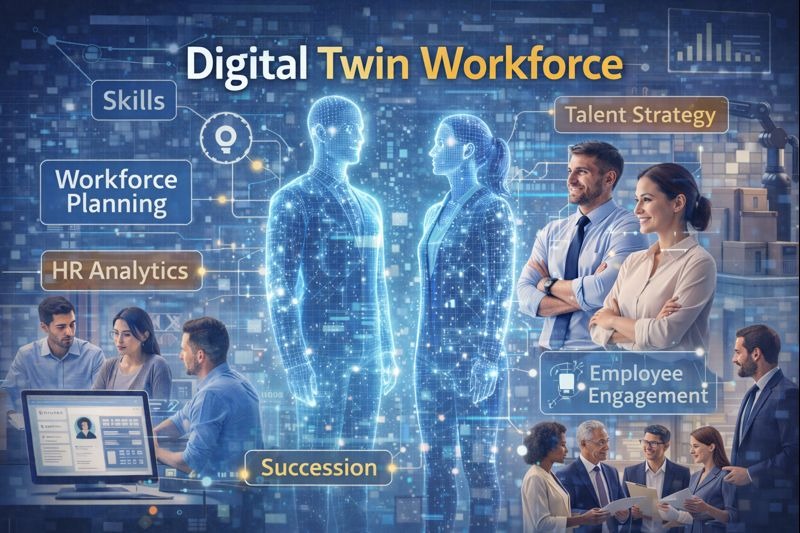
Digital twin technology, long used in manufacturing and engineering, is now emerging as a powerful tool for strategic HR and workforce planning.
What Is a Digital Twin Workforce?
A Digital Twin Workforce is a virtual model that mirrors the real workforce using live and historical data. It integrates information such as employee skills, roles, performance, engagement, workforce costs, attrition trends, and learning pathways.
This digital replica allows HR leaders to test scenarios such as hiring plans, restructuring, reskilling initiatives, or policy changes before applying them in the real world.
Why Strategic HR Needs Digital Twins
Modern HR leaders are expected to move beyond administration and act as strategic partners to the business. However, decisions around talent often involve uncertainty.
Digital twin workforce models help HR teams:
- Predict workforce risks and opportunities
- Understand the impact of business decisions on talent
- Align workforce capabilities with long-term strategy
- Move from reactive HR to proactive workforce planning
By simulating outcomes in advance, HR can make smarter, data-backed decisions with confidence.
Key Use Cases of the Digital Twin Workforce
Workforce Planning and Forecasting
HR teams can simulate future workforce scenarios based on growth plans, market changes, or automation initiatives. This helps identify hiring needs, skills shortages, and cost implications early.
Skills and Capability Mapping
Digital twins provide visibility into current skills and future requirements. HR leaders can model reskilling strategies and assess how learning investments impact workforce readiness.
Talent Mobility and Succession Planning
By analyzing roles, performance data, and career paths, digital twins support internal mobility and succession planning reducing reliance on external hiring.
Attrition and Engagement Risk Management
Predictive models can identify teams or roles at higher risk of attrition, allowing HR to intervene proactively through engagement or retention strategies.
Benefits for HR Leaders and Organizations
- Data-Driven Decisions: HR strategies grounded in real-time workforce intelligence
- Reduced Risk: Test initiatives virtually before implementation
- Improved Agility: Rapid response to business and market changes
- Better ROI on Talent Investments: Smarter hiring, learning, and workforce allocation
- Stronger Alignment with Business Strategy: Workforce plans directly tied to organizational goals
Technology Behind the Digital Twin Workforce
Digital twin workforce models rely on a combination of:
- Advanced analytics and AI
- HRIS, ATS, LMS, and performance data integration
- Scenario modeling and predictive algorithms
- Cloud-based platforms for real-time insights
When combined with strong data governance and ethical AI practices, these technologies enable responsible and transparent workforce intelligence.
HR tech is evolving fast. Are you keeping up? Read more at HR Technology Insights
To participate in our interviews, please write to our HRTech Media Room at [email protected]
댓글목록
no comments.