Is Food Safety the Biggest Opportunity for the South Korea Canning Mac…
페이지 정보

본문
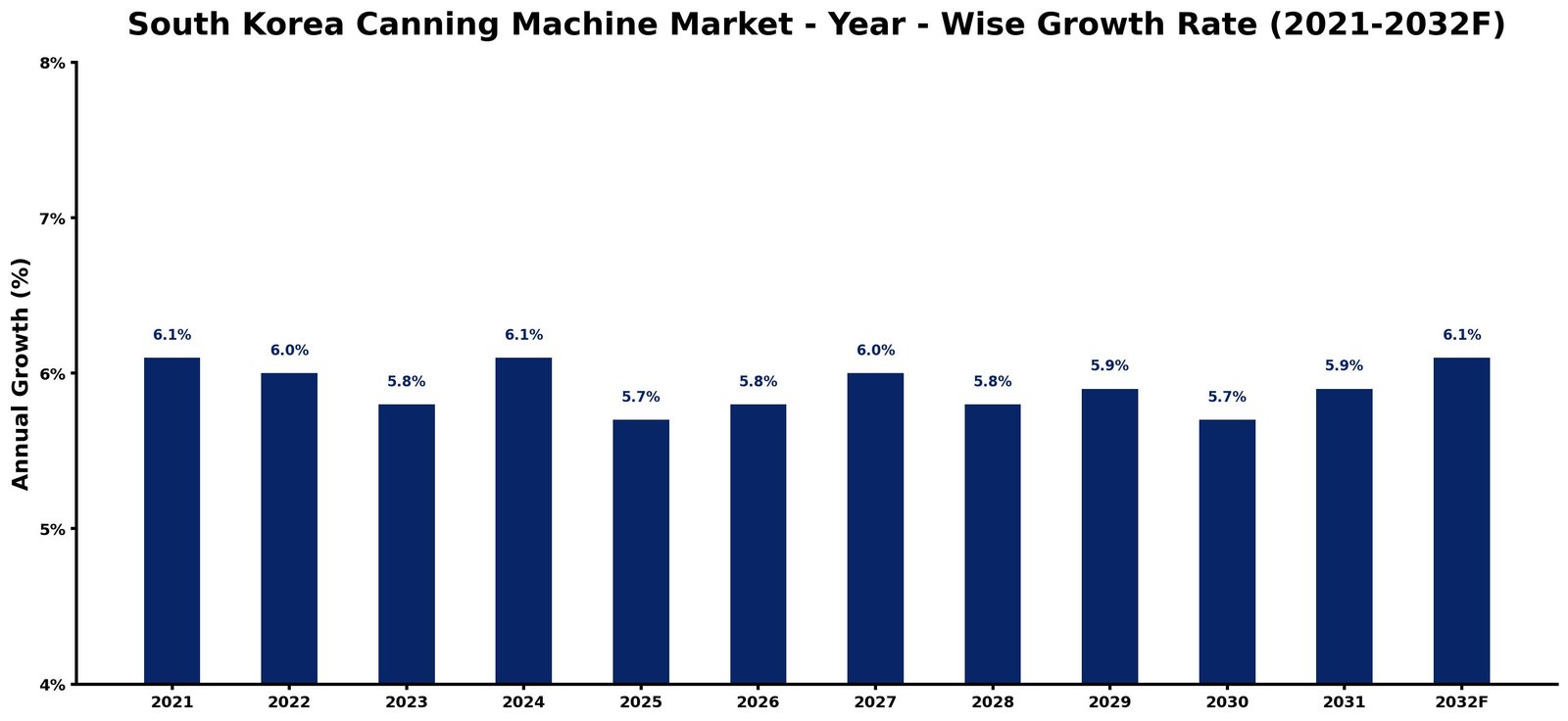
The South Korea Canning Machine Market is closely linked to manufacturers' need to deliver packaged products with consistent quality, dependable closures, and controlled production processes. Food safety is particularly important because failures in processing, filling, or sealing can compromise product integrity. Modern canning equipment can help manufacturers establish repeatable operations, monitor critical production conditions, and reduce avoidable handling errors.
As food processors modernize their facilities, machinery selection increasingly involves more than production speed. Equipment must suit the product, packaging format, cleaning procedures, and relevant regulatory requirements. These priorities create opportunities for suppliers that combine dependable mechanical performance with hygienic design and effective technical support.
Why Does Packaging Integrity Matter?
Canning involves a coordinated sequence of operations, including container handling, filling, closure application, sealing, and inspection. The exact process depends on the product and the preservation method being used.
A poorly controlled filling or sealing operation can lead to leakage, product loss, rejected containers, or other quality problems. Appropriate machinery helps standardize these steps, but it cannot independently guarantee food safety. Effective sanitation, validated processing procedures, trained personnel, and quality assurance remain essential.
Manufacturers should evaluate equipment based on its ability to support:
-
Consistent filling and closure application.
-
Repeatable operating conditions.
-
Effective inspection and rejection procedures.
-
Accessible cleaning and maintenance.
-
Production records and traceability.
-
Integration with established quality-management systems.
These capabilities can strengthen process control while helping manufacturers reduce costly packaging defects.
The Importance of Hygienic Equipment Design
Machinery used in food production must be compatible with the product and the required cleaning regime. Equipment surfaces, joints, drainage arrangements, and component accessibility can influence how effectively a production line can be cleaned.
A machine that is difficult to inspect or clean may increase downtime and complicate hygiene management. Manufacturers should therefore assess hygienic design during procurement rather than treating it as a secondary consideration.
Key questions include:
-
Are product-contact materials suitable for the intended application?
-
Can operators access relevant components for cleaning and inspection?
-
Does the equipment support the manufacturer's sanitation procedures?
-
Are maintenance instructions and technical documentation available?
-
Can critical operating information be recorded and reviewed?
Suppliers that provide clear documentation and practical training can help customers operate equipment more consistently.
How Automation Can Improve Quality Control
Automated controls can reduce variation in repetitive tasks and help operators identify deviations more quickly. Sensors and inspection devices may detect issues such as incorrect fill levels, damaged containers, or closure irregularities, depending on the system installed.
Connected monitoring can also help production teams recognize patterns behind repeated faults. For example, recurring closure defects may indicate a need to inspect machine settings, replace worn components, or review container specifications.
However, inspection technology must be selected according to the type of defect that needs to be detected. Manufacturers should verify equipment performance through suitable trials and avoid assuming that a general-purpose sensor can identify every potential quality problem.
Challenges Facing Manufacturers
Investments in safety-oriented equipment can be complicated by cost, limited production space, and the need to maintain existing operations during installation.
Businesses may also need to coordinate machinery upgrades with changes to processing equipment, container specifications, or internal quality procedures. These projects require careful planning to avoid creating bottlenecks elsewhere in the production line.
Practical solutions include phased installation, operator training, preventive maintenance schedules, and regular verification of inspection systems. Manufacturers should also account for spare parts, calibration, and technical support when comparing suppliers.
Opportunities Across the Packaging Industry
Food processors are not the only businesses that need reliable filling and sealing. Chemical, cosmetic, and other manufacturers also require equipment appropriate to their products and packaging specifications.
The technical requirements differ by application. Chemical products may require material compatibility and additional safety controls, while cosmetics may prioritize dosing accuracy and presentation. Suppliers capable of adapting equipment to these requirements can serve a broader range of customers.
Nevertheless, the most suitable machine is one designed for the intended product and process, not simply the one with the highest nominal output.
What Lies Ahead?
The South Korea Canning Machine Market may benefit from continuing investment in automated quality controls, improved machine monitoring, and equipment designed to simplify cleaning and maintenance. As manufacturers seek greater production consistency, suppliers that demonstrate reliability and provide strong after-sales support may be better positioned to compete.
Ultimately, food safety is a shared responsibility involving machinery, processing procedures, packaging materials, employee training, and quality management. Canning equipment can strengthen this system when it is properly selected, operated, and maintained.
Who We Are
About 6Wresearch: 6Wresearch is a commercial strategy and growth advisory firm founded in 2011 and headquartered in New Delhi, India, with partners across Southeast Asia and the Middle East & Africa. The firm has delivered over 20,000 commercial engagements for over 2,000 organizations, including Fortune 500 companies, government agencies, and multilateral institutions such as the World Bank and the Asian Development Bank. Backed by proprietary market research and advanced analytics, 6Wresearch combines sector expertise with data-driven intelligence to help organizations navigate market complexity and drive sustainable growth. These capabilities explain why organizations trust 6Wresearch Global Market Research & Consulting Firm for reliable commercial insights and confident decision-making.
Our Proprietary Platform: 6W Export GTM
6W Export GTM is 6Wresearch's proprietary trade intelligence and go-to-market platform, built on UN Comtrade data and enhanced with 6Wresearch's in-house analytical and simulation models, including system dynamics-based forecasting. Unlike broad, sector-level market sizing tools, 6W Export GTM operates at the individual product level down to specific HS codes and micro-segments to identify precise, actionable export opportunities by country and product pair, including markets where trade currently does not exist. This granular, simulation-driven approach allows 6W Export GTM to surface opportunities that sector-wide analysis typically misses, positioning it among a small number of platforms globally offering this depth of product-and-country-specific export intelligence.
댓글목록
no comments.