Keyword Clustering Explained: 7 Steps to Supercharge Your B2B SEO
페이지 정보

본문
If you’re still targeting one keyword per page, you’re missing out on how modern SEO works. Today, search engines like Google focus on topics, intent, and relevance not just individual keywords. That’s where keyword clustering comes in.
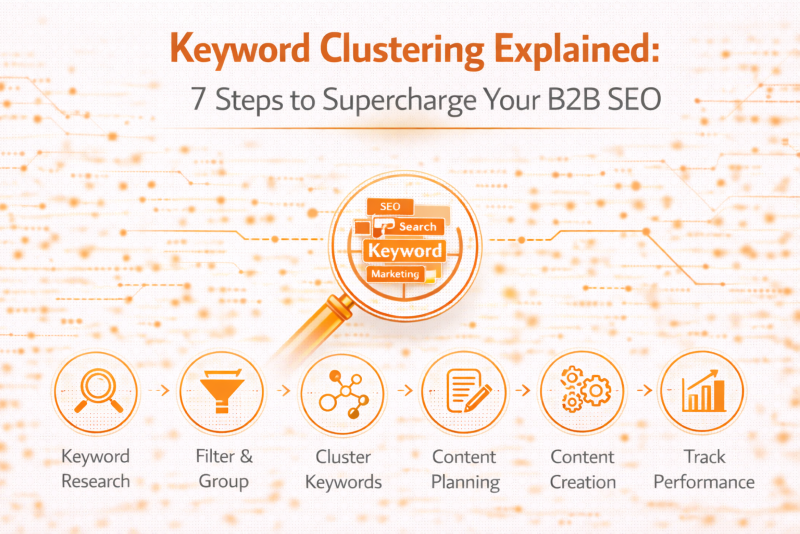
Keyword clustering is the process of grouping similar and related keywords together so you can create one comprehensive piece of content that ranks for multiple search queries. Instead of spreading your efforts across many pages, you build stronger, more authoritative content around a central topic.
Why Keyword Clustering Matters for B2B SEO
B2B buyers don’t search once they research deeply. They explore multiple queries, compare options, and look for detailed insights before making a decision.
Keyword clustering helps you:
- Rank for multiple related search terms
- Build topical authority in your niche
- Improve content relevance and depth
- Avoid keyword cannibalization
- Attract more qualified traffic
In short, it aligns your content with how real buyers search and how search engines rank content.
7 Steps to Boost Your B2B SEO with Keyword Clustering
1. Identify a Core Topic
Start with a main topic relevant to your business such as “B2B lead generation” or “account-based marketing.” This becomes the foundation of your cluster.
2. Perform Comprehensive Keyword Research
Use tools like Google Keyword Planner, Ahrefs, or SEMrush to find:
- Related keywords
- Long-tail variations
- Question-based queries
The goal is to gather a broad list of relevant terms.
3. Analyze Search Intent
Group keywords based on what users want:
- Informational (learning something)
- Consideration (comparing options)
- Transactional (ready to act)
Understanding intent ensures your content matches user expectations.
4. Group Keywords into Clusters
Organize keywords into logical groups. For example:
Cluster: B2B SEO Strategy
- b2b seo strategy
- seo strategies for b2b companies
- how to improve b2b seo
Each cluster should represent a clear topic.
5. Map Clusters to Content Pages
Assign one cluster to one page or blog. This avoids overlap and ensures each page has a strong, focused purpose.
6. Optimize Content for Semantic SEO
Use keyword variations naturally throughout your content:
- Headings and subheadings
- Body text
- Meta descriptions
- Internal links
This helps search engines understand the context of your content.
7. Monitor and Refine Performance
SEO is an ongoing process. Track rankings, traffic, and engagement. Update content regularly to maintain and improve performance.
Best Practices for B2B Marketers
- Focus on user intent, not just keywords
- Create in-depth, high-quality content
- Use internal linking to connect related topics
- Align content with the buyer journey
Conclusion
Keyword clustering is a smarter, more strategic approach to SEO especially for B2B businesses. By focusing on topics rather than individual keywords, you can build stronger content, improve rankings, and attract more qualified leads.
In a competitive digital landscape, success comes from not just being visible but being relevant, helpful, and authoritative. Keyword clustering helps you achieve exactly that.
Top of Form
INTENT AMPLIFY is evolving fast. Are you keeping up? Read more at intentamplify.com
To participate in our interviews, please write to our Media Room at [email protected]
댓글목록
no comments.