Long-Tail Keywords Explained: A Hidden Growth Engine for B2B Lead Gene…
페이지 정보

본문
In the world of B2B digital marketing, attracting the right audience is more important than attracting a large one. While many marketers focus on high-volume keywords, these terms are often highly competitive and less specific. This is where long-tail keywords play a crucial role.
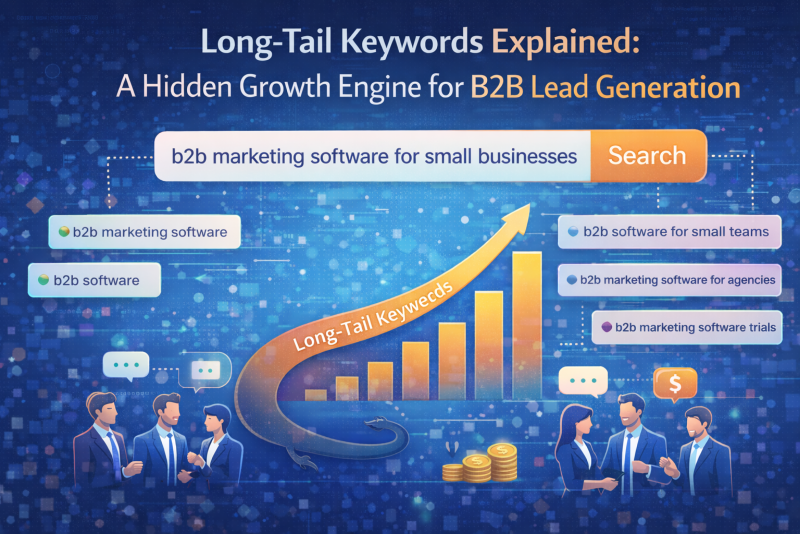
Long-tail keywords are longer, more specific search phrases that typically contain three or more words. Instead of searching for a broad term like “CRM software,” a B2B buyer might search for “best CRM software for small B2B companies.” These detailed queries reveal clear intent, making them highly valuable for lead generation.
Why Long-Tail Keywords Matter in B2B Marketing
B2B buyers are not casual browsers they conduct detailed research before making decisions. Long-tail keywords align perfectly with this behavior, helping businesses attract users who are closer to making a purchase.
Key Benefits of Long-Tail Keywords
1. Higher
Intent and Better Lead Quality
Long-tail keywords often reflect specific needs or problems. This means users
searching for these terms are more likely to convert into leads or customers.
2. Lower
Competition
Broad keywords are highly competitive and difficult to rank for. Long-tail
keywords, on the other hand, have less competition, making it easier to achieve
higher rankings in search results.
3.
Improved Conversion Rates
Because long-tail searches are more targeted, they tend to deliver higher
conversion rates. Users already know what they’re looking for, making them more
likely to take action.
4. Better
Alignment with the Buyer Journey
Long-tail keywords often match different stages of the buyer journey—from
awareness to decision-making. This allows marketers to create content that
addresses specific needs at each stage.
Examples of Long-Tail Keywords in B2B
Instead of targeting broad keywords like:
- “Marketing automation”
You can target long-tail variations such as:
- “best marketing automation tools for B2B startups”
- “how to choose marketing automation software for SaaS companies”
- “affordable marketing automation platforms for small businesses”
These keywords attract more qualified and relevant traffic.
How to Use Long-Tail Keywords Effectively
1. Focus
on Search Intent
Understand what the user is trying to achieve are they researching, comparing,
or ready to buy?
2. Create
Targeted Content
Develop blog posts, guides, case studies, and landing pages that directly
address specific queries.
3.
Optimize for SEO
Include long-tail keywords naturally in headings, subheadings, and content while
maintaining readability.
4. Use
Keyword Research Tools
Tools like Google Keyword Planner, Ahrefs, and SEMrush can help identify
valuable long-tail opportunities.
5.
Leverage FAQs and Conversational Content
Many long-tail keywords are question-based. Including FAQs in your content can
improve visibility and relevance.
Common Mistakes to Avoid
- Ignoring long-tail keywords in favor of high-volume terms
- Overstuffing keywords instead of writing naturally
- Not aligning content with user intent
- Failing to update content based on search trends
Conclusion
Long-tail keywords are a powerful yet often underutilized strategy in B2B lead generation. By focusing on specific, intent-driven search queries, businesses can attract more qualified prospects, improve conversion rates, and build stronger connections with their audience.
In a competitive digital landscape, success is not just about ranking higher it’s about reaching the right audience at the right time with the right message. Long-tail keywords make that possible.
Top of Form
INTENT AMPLIFY is evolving fast. Are you keeping up? Read more at intentamplify.com
To participate in our interviews, please write to our Media Room at [email protected]
댓글목록
no comments.