Shadow AI in the Workplace: What It Means for B2B Companies
페이지 정보

본문
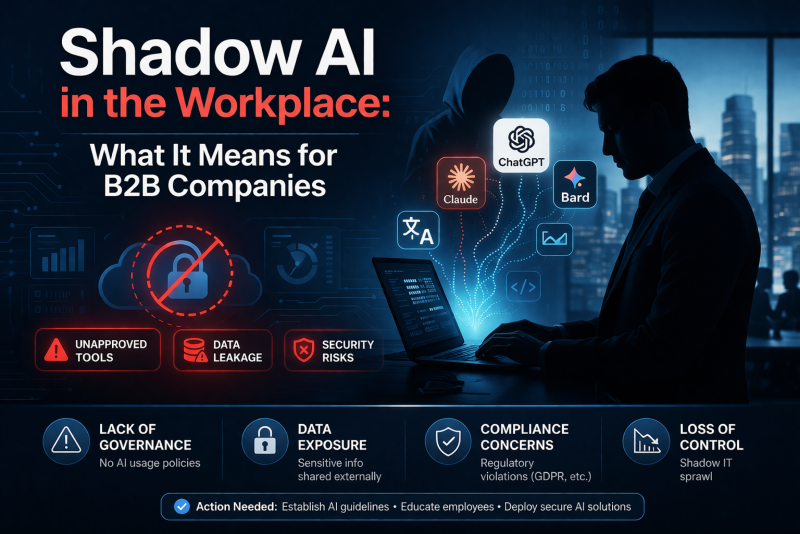
As artificial intelligence becomes embedded in everyday workflows, a new challenge is emerging for organizations Shadow AI. Similar to the concept of shadow IT, Shadow AI refers to the use of AI tools and applications within a company without official approval, oversight, or governance. While these tools can boost productivity, they also introduce serious risks that B2B companies cannot afford to ignore.
What Is Shadow AI?
Shadow AI occurs when employees use AI-powered tools such as generative AI platforms, automation tools, or data analysis applications outside of the organization’s approved technology stack. This often happens because teams want to work faster, experiment with new tools, or solve problems without waiting for IT approval.
For example, an employee might use an AI tool to generate content, analyze customer data, or automate workflows without considering compliance or security implications.
Why Is Shadow AI Growing?
The rapid adoption of AI tools has made them easily accessible to anyone with an internet connection. Several factors are driving the rise of Shadow AI:
- Ease of access: Many AI tools are free or low-cost and require no formal setup
- Pressure for productivity: Employees seek faster ways to complete tasks
- Lack of clear policies: Organizations may not yet have defined AI usage guidelines
- Innovation culture: Teams want to experiment with new technologies
While these factors encourage innovation, they also create blind spots in organizational control.
Risks Associated with Shadow AI
1. Data
Security and Privacy Risks
Employees may unknowingly share sensitive business or customer data with
external AI tools. This can lead to data leaks, compliance violations, and
reputational damage.
2.
Compliance and Regulatory Issues
Unapproved AI usage may violate industry regulations or data protection laws,
especially in sectors with strict compliance requirements.
3. Inconsistent
Data and Decision-Making
Without centralized governance, different teams may use different tools and
data sources, leading to inconsistent insights and decisions.
4. Lack
of Visibility and Control
IT and security teams cannot manage or monitor tools they are unaware of,
making it difficult to enforce security policies.
Why B2B Companies Should Care
For B2B organizations, the stakes are particularly high. They handle sensitive client data, operate within complex compliance frameworks, and rely heavily on trust. Shadow AI can undermine all of these.
At the same time, ignoring AI adoption is not an option. The challenge for B2B companies is to balance innovation with control—enabling employees to use AI productively while minimizing risks.
How to Manage Shadow AI Effectively
1.
Establish Clear AI Governance Policies
Define what tools are approved, how they should be used, and what data can be
shared.
2.
Educate Employees
Provide training on the risks and best practices of using AI tools responsibly.
3.
Implement Approved AI Solutions
Offer secure, enterprise-grade AI tools that meet organizational requirements,
reducing the need for unauthorized alternatives.
4.
Monitor and Audit Usage
Use monitoring tools to gain visibility into AI usage across the organization.
5. Foster
a Culture of Responsible Innovation
Encourage experimentation while ensuring that it aligns with security and
compliance standards.
The Future of AI in B2B Organizations
Shadow AI is a sign of how quickly AI is becoming essential to modern work. Rather than trying to eliminate it entirely, organizations should focus on managing and integrating AI responsibly.
Conclusion
Shadow AI represents both a risk and an opportunity for B2B companies. While unauthorized AI usage can lead to security and compliance challenges, it also highlights the growing demand for AI-driven productivity.
By implementing clear governance, providing the right tools, and educating employees, B2B organizations can turn Shadow AI from a hidden risk into a strategic advantage unlocking innovation while maintaining control and trust.
INTENT AMPLIFY is evolving fast. Are you keeping up? Read more at intentamplify.com
To participate in our interviews, please write to our Media Room at [email protected]
댓글목록
no comments.