7 Essential KPIs to Measure Your B2B ABM Campaign Success
페이지 정보

본문
Account-Based Marketing (ABM) has changed the way B2B companies approach advertising. Instead of targeting a broad audience, ABM focuses on high-value accounts, delivering personalized campaigns that drive deeper engagement and better results.
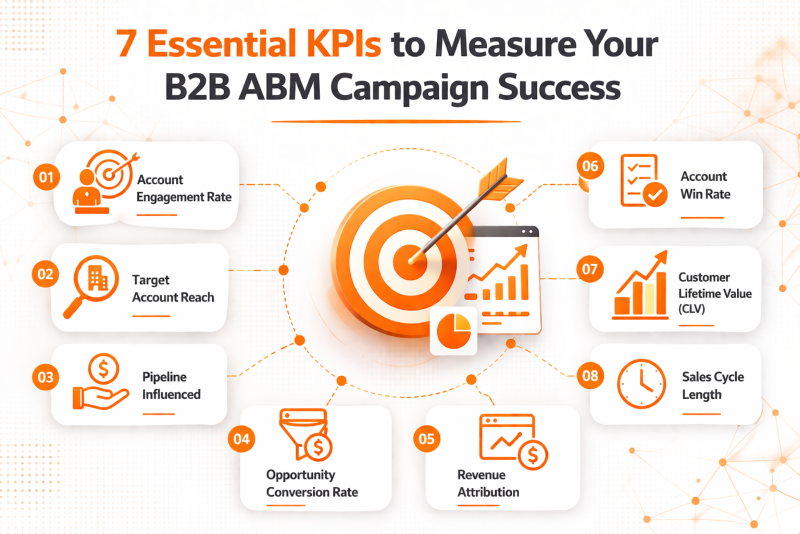
But success in ABM isn’t just about launching campaigns it’s about measuring what truly matters. Traditional metrics like impressions or clicks don’t tell the full story. To understand impact, you need account-centric KPIs that connect marketing efforts to revenue.
7 KPIs That Matter for B2B ABM Campaigns
1. Account Engagement Score
This metric measures how target accounts interact with your campaigns across channels ads, emails, website visits, and content downloads.
A higher engagement score indicates growing interest and stronger buying intent within key accounts.
2. Reach Within Target Accounts
In B2B, decisions are made by multiple stakeholders. This KPI tracks how many individuals within a target account are engaging with your brand.
The broader your reach within an account, the higher your chances of influencing the buying decision.
3. Click-Through Rate (CTR)
CTR shows how effective your ad creatives and messaging are. A strong CTR indicates that your content is relevant and capturing attention.
While it’s a traditional metric, it still plays a role in measuring engagement quality.
4. Conversion Rate
This KPI tracks how many engaged accounts take meaningful actions such as filling out a form, booking a demo, or signing up for a webinar.
In ABM, conversions are more valuable because they come from pre-qualified, high-value accounts.
5. Pipeline Contribution
One of the most important metrics, pipeline contribution measures how your campaigns influence the sales pipeline opportunities created, deal value, and progression.
This directly connects marketing efforts to revenue impact.
6. Cost Per Account (CPA)
Instead of cost per lead, ABM focuses on cost per account. This metric evaluates how much you’re spending to engage or convert each target account.
It helps ensure your campaigns are cost-effective while targeting high-value prospects.
7. Return on Investment (ROI)
Ultimately, success comes down to ROI. This KPI compares the revenue generated from ABM campaigns to the total investment.
A positive ROI confirms that your strategy is delivering real business value.
Best Practices for Measuring ABM Success
- Focus on account-level insights, not just individual leads
- Align marketing and sales teams on shared KPIs
- Use integrated tools (CRM + marketing platforms) for accurate tracking
- Monitor performance regularly and optimize campaigns
Common Mistakes to Avoid
- Relying only on vanity metrics like impressions
- Ignoring multi-touch attribution
- Focusing on lead volume instead of account quality
- Not connecting marketing efforts to revenue
Conclusion
Measuring the success of B2B ABM advertising requires a shift in mindset from lead-based metrics to account-driven performance indicators. By focusing on engagement, pipeline impact, and ROI, businesses can gain a clear understanding of what’s working.
In today’s competitive B2B landscape, the brands that succeed are those that don’t just run campaigns they measure, optimize, and continuously improve based on the right data.
INTENT AMPLIFY is evolving fast. Are you keeping up? Read more at intentamplify.com
To participate in our interviews, please write to our Media Room at [email protected]
댓글목록
no comments.