From Defense to Offense: How AI Is Reshaping Cyber Warfare
페이지 정보

본문
Artificial Intelligence (AI) is no longer just a tool for innovation—it has become a powerful weapon in modern cyber warfare. As nations, cybercriminal groups, and hacktivists adopt AI-driven technologies, the nature of cyber conflict is rapidly evolving. What was once a domain of manual attacks and static defenses is now a dynamic battlefield shaped by intelligent, adaptive systems.
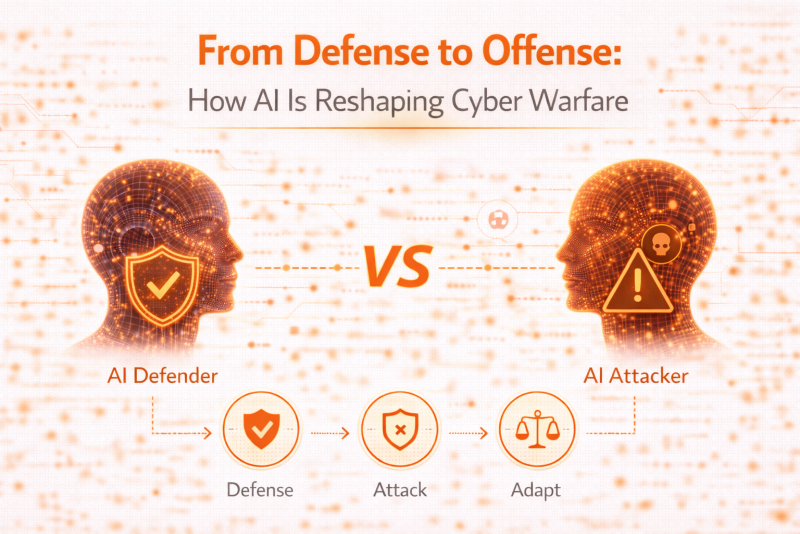
One of the most significant ways AI is transforming cyber warfare is through automation and scale. Attackers can now launch highly sophisticated campaigns with minimal human effort. AI enables the rapid generation of phishing emails, malware variants, and attack scripts, allowing threat actors to target thousands of systems simultaneously. This scalability increases both the speed and impact of cyberattacks.
AI also enhances precision targeting. By analyzing vast amounts of data from social media, corporate websites, and public records, AI can identify high-value targets and craft tailored attack strategies. This level of personalization makes attacks more convincing and difficult to detect, particularly in social engineering campaigns.
Another critical development is the rise of adaptive and self-learning malware. Unlike traditional malware, AI-powered variants can evolve in real time, modifying their behavior to evade detection. These systems can analyze the defenses they encounter and adjust accordingly, making them significantly more resilient against conventional security measures.
On the defensive side, AI is equally transformative. Cybersecurity teams are using AI to detect anomalies, predict threats, and automate responses. AI-driven security platforms can analyze massive datasets in real time, identifying suspicious patterns and responding to incidents faster than human analysts. This creates an ongoing arms race, where attackers and defenders continuously refine their AI capabilities.
However, the weaponization of AI introduces new risks beyond technical challenges. Deepfake technology can be used to spread misinformation, impersonate leaders, or manipulate public opinion, blurring the line between cyber warfare and information warfare. Additionally, autonomous AI systems could potentially operate without direct human control, raising ethical and accountability concerns.
The global implications are significant. Nation-states are investing heavily in AI-driven cyber capabilities, integrating them into broader military and intelligence strategies. This increases the potential for large-scale cyber conflicts that can disrupt critical infrastructure, financial systems, and communication networks.
To address these challenges, organizations and governments must adopt a proactive and collaborative approach. This includes investing in AI-driven defenses, establishing international norms for AI use in cyber warfare, and enhancing threat intelligence sharing. Human oversight and ethical frameworks will also be essential to ensure responsible use of AI technologies.
In conclusion, AI has fundamentally changed the nature of cyber warfare. As both a weapon and a defense mechanism, it is driving a new era of digital conflict. Organizations that understand and adapt to this shift will be better equipped to navigate the risks and protect their critical assets in an increasingly AI-driven world.
Read more : cybertechnologyinsights.com/
To participate in our interviews, please write to our Media Room at [email protected]
댓글목록
no comments.